Billy wallson
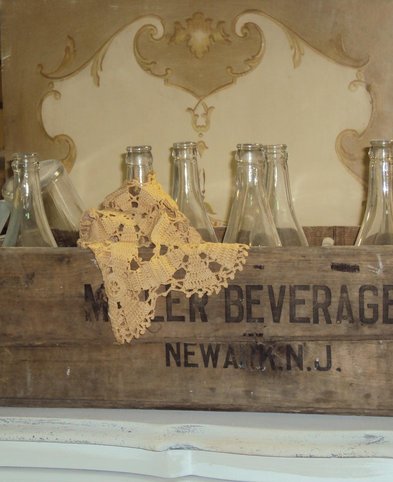
Senior DirectorA beat-up wooden crate is one of the most versatile pieces you can bring home, and it takes almost no work to make it shine.

Ask ten slot players what makes a game "good" and you'll get ten different answers. One swears by a machine that paid out 400x last Tuesday. Another refuses to touch anything under 96% RTP. A third just likes the ones with dragons. All three are partly right, and all three are missing the same piece of the puzzle: the math underneath the reels doesn't care what you believe about it.
Understanding how slot math actually works won't guarantee you a payday. Nothing will. But it will stop you from making decisions based on superstition, and in a game where the house already holds an edge, that's worth real money over time.
Return to Player is the single most misunderstood number in iGaming. A slot with 96% RTP doesn't return $96 for every $100 you feed it. It returns roughly $96 for every $100 wagered across millions of spins, often spanning years and thousands of players. Your individual session is statistical noise inside that average.
Here's what RTP does tell you: over an enormous sample, you lose 4% of everything you wager on a 96% game, and 8% on a 92% game. That gap matters more than most players realize. Wagering $1,000 a week, the difference between a 96% and a 92% slot costs you an extra $40 weekly — over $2,000 a year, purely from game selection.
Useful reference points from the major regulators:
The takeaway isn't that slots are bad. It's that slots are the most expensive entertainment on the floor, and knowing that lets you budget accordingly.
Two slots can share the same 96% RTP and feel completely different. That's variance — the size and frequency of payouts relative to your bet. Low-variance slots dribble small wins constantly, keeping your balance steady but rarely spiking. High-variance slots grind you down for hundreds of spins before potentially dropping a 5,000x monster.
Neither is "better." They serve different bankrolls and different personalities.
A practical rule: your session bankroll should cover at least 100–200 spins at your chosen stake for medium variance, and 300+ for high variance. If you're betting $1 a spin with a $50 bankroll on a high-variance game, you're not playing — you're gambling on a coin flip before the math even has room to breathe.
Hit frequency is the percentage of spins that return anything, including a fraction of your stake. A slot with 25% hit frequency wins once every four spins on average. One with 15% wins roughly once every seven.
This number shapes your experience more than RTP in the short term. A 96% RTP slot with 15% hit frequency will feel brutal for stretches, even though the math is generous long-term. Meanwhile, a 94% RTP slot with 40% hit frequency feels generous because you're constantly seeing wins, even if they're tiny.
Most players never check hit frequency. It's usually buried in the paytable or game info screen. Do check it. It explains why two games with identical RTP feel worlds apart. A detailed guide is available at สล็อตเว็บตรง.
Slots get the attention, but the same principles apply elsewhere in iGaming — often with better numbers.
In poker, the house doesn't take a cut per hand based on odds; it takes rake. A 5% rake on a cash game means you're fighting a smaller edge than any slot. Skilled players can actually beat low-stakes games over thousands of hands. That's not true for slots, and it's not true for most sports betting either.
Sports betting works differently again. The bookmaker prices in a margin — typically 4–8% on a two-way market, higher on parlays and prop bets. If you're betting favorites at -200 repeatedly without line shopping between books, you're donating more margin than a slots player loses on a decent game. Line shopping and taking advantage of boosted odds and promotions is the equivalent of choosing a 97% slot over a 92% one.
Where players consistently lose value in betting:
You cannot control variance. You cannot predict the next spin. You can control how much money you expose to the math, and that's the entire game.
A few principles worth internalizing:
The players who treat gambling as entertainment with a fixed cost — like a cinema ticket — consistently outlast the ones chasing jackpots. That's not moralizing. It's arithmetic.
The casino doesn't need to cheat you. The math is already designed to win over time, and no hot streak, ritual, or lucky charm changes that. What you can do is pick better games, size your bets sensibly, and walk away while you're still having fun. Choose a 97% RTP medium-variance slot over a 92% high-variance one. Take advantage of every bonus and free spin offer you're actually eligible for. Shop betting lines. Learn basic poker strategy before depositing. These aren't tricks. They're the difference between playing with a plan and paying for a lesson the hard way. The reels spin the same for everyone. What you bring to them is the only variable that's truly yours.
The container does half the work in dried floral arranging, and these five thrift store finds turn inexpensive stems into something gallery-worthy.

Stop fighting for symmetry and let your centerpieces look like they grew that way, with a few simple tricks.
Air drying, pressing, and silica gel each preserve flowers differently, and choosing the right method for each bloom makes all the difference.

An entryway table is the first thing guests see, and a few seasonal swaps keep it feeling fresh without a full redecorating project.

A beat-up wooden crate is one of the most versatile pieces you can bring home, and it takes almost no work to make it shine.

The container does half the work in dried floral arranging, and these five thrift store finds turn inexpensive stems into something gallery-worthy.
Copyright © 2026 Burlap And Bloom. All Rights Reserved.




Roseanne Williams
Sep 4, 2026 ReplyA simple, forgiving wreath project that pairs rustic burlap ribbon with airy dried baby's breath for a look that works from spring through fall.